
Mobb vs LyraShield
How LyraShield AI release assurance compares to Mobb automated vulnerability triage, predictable fixes, and AI code trust for AI-built apps.
On this page
Mobb is an AI-powered remediation platform founded in 2021 that triages and fixes code vulnerabilities with predictable, reviewable fixes, integrates with scanners like Snyk and Black Duck, and offers Tracy for AI code visibility and governance. LyraShield AI is release assurance for AI-built apps: it pairs an agentic pentest with SCA and secrets, separates detection from proof, and produces an immutable evidence record with approval-gated fixes. Mobb excels at consistent, scalable remediation; LyraShield closes the proof and release-decision gap.
This comparison is part of our broader vibe coding security guide, which covers the full release-assurance methodology for AI-built applications.
What Mobb does well
Mobb is built around a clear thesis: the problem is not finding vulnerabilities, it is fixing them at scale. Mobb automatically triages findings from scanners like Snyk and Black Duck, then applies predictable, reviewable fixes that integrate directly into existing workflows and CI and CD pipelines. The guiding principle is consistency: same issue, same fix, across repos, teams, and time. Fixes include built-in security context so developers understand the reasoning behind a patch, not just the change.
Mobb has expanded its integrations to meet developers where they are, including VS Code, Copilot, Claude, Gemini, Devin, and Tabnine. The company covers Go, Java, JavaScript, Python, and C#, with false-positive detection rules across major scanners. In 2025, Mobb expanded automated fixes, added false-positive detection, and rolled out org-level and project-level dashboards with upgraded APIs and a full technical brief for security and engineering teams.
A notable addition is Tracy, which gives enterprises visibility into how AI-generated code is shaping their systems: which tools are used, which repositories are affected, which patterns repeat, and how quality shifts over time. This addresses a real gap, since AI coding tools are now the default way software is written. Mobb positions itself as building the platform for AI code trust, giving engineering leaders clarity and security teams evidence rather than assumptions. Its coverage aligns with the OWASP Top 10 and common CWE categories, and it partners with established scanners rather than replacing them.
Mobb’s partnership model is a practical strength. By integrating with Snyk and Black Duck rather than competing with them, Mobb turns existing scanner investments into remediation outcomes, which lowers the barrier to adoption for teams that already have a detection layer. The Tracy product addresses a gap that has grown with AI coding: organizations often do not know which tools their developers use, which repositories contain AI-generated code, or how quality is shifting over time. That visibility is a governance prerequisite for any team trying to manage AI code at scale.
Where LyraShield’s release assurance approach differs
Mobb and LyraShield both target AI-generated code and both gate fixes behind human review. The differences are in the loop, the record, and the integration depth.
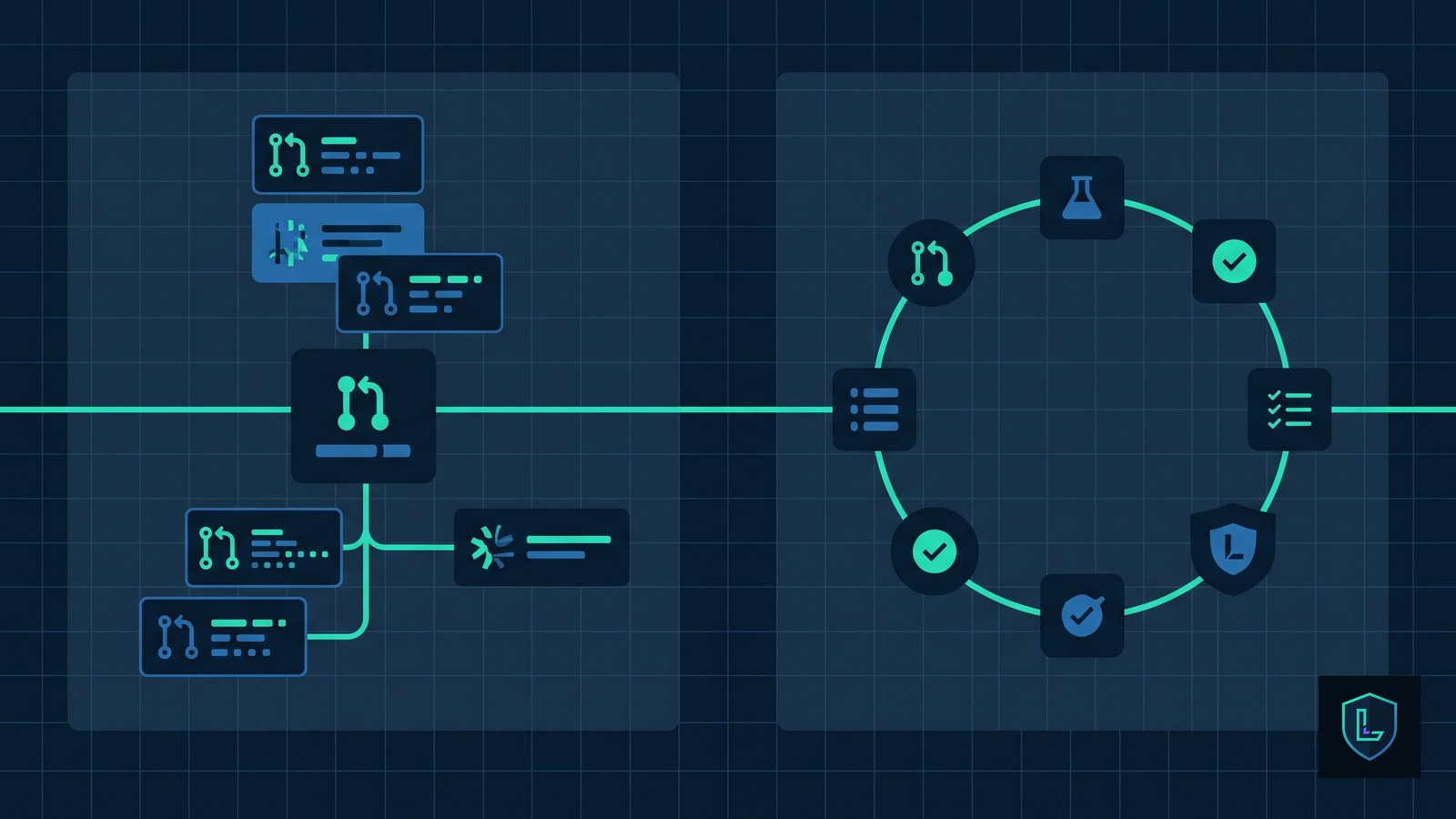
The LyraShield loop is target, review, evidence, fix, retest, report. The agentic pentest runs its own checks against the live target, rather than triaging another scanner’s findings. Results are recorded as evidence states that distinguish a detected pattern from a proven exploitable issue from a fixed and retested one. That immutable record is the deliverable for a release decision, not a count of fixed findings. Mobb’s Tracy gives visibility into how AI code shapes systems; LyraShield’s evidence record gives proof for a specific release.
LyraShield runs inside AI coding agents through the Model Context Protocol, so checks happen where the agent writes code. Fix proposals are approval-gated and retested before closing. The difference from Mobb’s predictable-fix model is that LyraShield requires a retest to close a finding, not just a consistent patch. v1 coverage pairs the agentic pentest with SCA, secrets, a reusable GitHub Action, and SARIF output.
For dependency risk, LyraShield uses SCA backed by sources like the OSV database. Mobb’s strength is scalable, consistent remediation across a scanner stack; LyraShield’s is the release-assurance loop for one AI-built app at a time.
The difference in what each tool records is the core distinction. Mobb records fixed findings and provides visibility into AI code patterns across an organization, which serves engineering leaders and security teams managing remediation at scale. LyraShield records evidence states for a specific app, capturing what was proven exploitable against the running target and what was retested after a fix, which serves the reviewer making a release decision. Both keep a human in the loop on fixes; LyraShield adds the mandatory retest that closes a finding.
Who each tool fits
Use Mobb when you have a scanner stack generating findings and your pain point is remediation at scale: you need predictable, reviewable fixes that integrate into CI and CD, plus visibility into how AI-generated code is evolving. It is a strong choice for enterprises that want to burn down backlogs consistently across repos and teams, with Tracy for governance and visibility into AI coding patterns.
Use LyraShield AI when the specific need is a release decision for an AI-built app, backed by proof, an immutable record, and approval-gated fixes with a mandatory retest. The tools can complement each other: Mobb for backlog reduction and AI code visibility, LyraShield for release sign-off.
Mobb and LyraShield fit naturally at different stages. Mobb runs continuously, triaging scanner findings and applying consistent fixes across repos, with Tracy providing the governance visibility that engineering leaders need. LyraShield runs at the release gate, producing the evidence record that supports a specific ship decision. Because Mobb integrates with existing scanners and LyraShield emits SARIF, the two can sit in the same pipeline, with Mobb handling remediation throughput and LyraShield handling release assurance.
| Dimension | Mobb | LyraShield AI |
|---|---|---|
| Primary goal | Consistent, scalable remediation | Release assurance with proof for AI-built apps |
| Detection model | Triage of scanner findings, predictable fixes | Agentic pentest plus SCA plus secrets, evidence states |
| Fix model | Reviewable fixes with security context | Approval-gated fix proposals, retest before close |
| Agent integration | VS Code, Copilot, Claude, Devin, Tracy | MCP inside AI coding agents plus GitHub Action |
| Output | Fixed findings, AI code visibility | Immutable assurance record, SARIF |
For the detailed breakdown see the Mobb comparison page. If you are securing a v0-built app, the v0 app security checklist is a useful companion.
Why teams choose LyraShield for AI-built apps
Teams choose LyraShield when the deliverable is a release decision, not a fixed finding count. The agentic pentest proves whether a finding is real against the running app, the immutable evidence record gives reviewers and auditors something concrete, and approval-gated fixes with a mandatory retest keep a human accountable for every change. For apps where the code came from a coding agent and the team needs to make a go or no-go decision, that loop turns a stream of fixes into a defensible release decision.
Mobb is a strong remediation platform with consistent fixes and Tracy for AI code visibility. LyraShield does not try to out-remediate it. The value is the focused loop: target, review, evidence, fix, retest, report. For an app whose code came from a coding agent, that loop is what turns a stream of fixes into a defensible go or no-go backed by proof.
For teams already using Mobb for consistent remediation and AI code visibility, LyraShield adds the release-gate record that remediation tooling does not produce. Mobb’s predictable fixes and Tracy dashboards keep the backlog moving and give leaders governance insight, and the immutable evidence record closes the loop when someone must sign off on a specific release. That division lets each tool do what it is built for: Mobb for remediation at scale, LyraShield for the proof that supports a ship decision.
LyraShield is live with open registration. Some platform features remain on the near-term roadmap and are not yet live, so check the current status on the site before relying on a specific capability. Run the AI app security checklist on your project, then sign up at https://lyrashieldai.com to start a release-assurance run.
Frequently asked
Does Mobb fix vulnerabilities from other scanners?
Yes. Mobb integrates with scanners like Snyk and Black Duck, automatically triages their findings, and applies predictable, reviewable fixes that integrate into CI and CD pipelines. LyraShield runs its own agentic pentest alongside SCA and secrets, then produces an immutable evidence record for the release decision.
How do the fix models compare?
Mobb emphasizes consistent, predictable fixes: same issue, same fix, across repos and time, with built-in security context so developers understand the reasoning. LyraShield proposes approval-gated fixes and retests them before closing, recording the result as an evidence state in an immutable record.
Does Mobb govern AI coding agents?
Mobb integrates with VS Code, Copilot, Claude, Gemini, Devin, and Tabnine, and its Tracy product gives visibility into how AI-generated code shapes systems over time. LyraShield runs inside AI coding agents through the Model Context Protocol, focusing on the release-assurance loop.
Is Mobb pricing public?
Mobb offers a demo but does not publish pricing on its main site as of this writing. LyraShield is in open beta with open registration at lyrashieldai.com. Contact Mobb directly for current pricing and plan details.
Related posts
- Aider App Security Checklist for AI Pair Programming
A security checklist for reviewing apps built with Aider covering MCP server config, secrets, dependencies, and verifiable evidence with LyraShield AI.
- Using LyraShield AI Alongside Aider for Secure AI Coding
How to run LyraShield security checks alongside Aider today using the CLI and GitHub Action diff gate. Native MCP is a roadmap item Aider has not yet shipped.
- Aikido vs LyraShield for AI Built App Security
Aikido unifies SAST SCA secrets and cloud scanning from code to runtime; LyraShield wraps AI app testing in a release assurance loop with approval gated fixes.