
Semgrep vs LyraShield
How LyraShield AI release assurance compares to Semgrep open-source SAST and the Semgrep AppSec Platform for AI-built apps.
On this page
Semgrep is a fast, open-source static analysis tool that finds insecure code patterns across more than 30 languages, with a commercial AppSec Platform that adds SCA, secrets, and cross-file taint analysis. LyraShield AI is release assurance for AI-built apps: it pairs an agentic pentest with SCA and secrets, separates detection from proof, and produces an immutable evidence record with approval-gated fixes. Semgrep excels at pattern detection; LyraShield closes the proof and release-decision gap.
This comparison is part of our broader vibe coding security guide, which covers the full release-assurance methodology for AI-built applications.
What Semgrep does well
Semgrep is the tool most developers reach for when they want lightweight, customizable static analysis. Its Community Edition is open source under an LGPL license, supports more than 30 programming languages, and ships with over a thousand community rules from the Semgrep Registry. Rules are written in a syntax that resembles the code being scanned, which makes custom rule authoring approachable without learning a separate query language or wrestling with abstract syntax trees. Semgrep runs without a build for most languages, which means it works on almost any repository without complex setup.
The commercial Semgrep AppSec Platform adds cross-file and interfile taint analysis, reachability checks for open-source dependencies, secrets detection, pull request comments, and an AI Assistant for triage and remediation. The Semgrep team is explicit in its own documentation that Community Edition, limited to single-function analysis, will miss many true positives and recommends the platform for real security use cases. The AI Assistant reports that humans agree with its auto-triage decisions 97 percent of the time and rate generated remediation guidance as helpful 80 percent of the time.
Semgrep Supply Chain covers 12 languages across 15 package managers, detecting reachable vulnerabilities in open-source dependencies. The platform now combines deterministic static analysis with AI-powered detection to extend coverage to complex business-logic flaws like insecure direct object reference and broken authentication. Semgrep’s strengths are speed, customizability, and a mature open-source ecosystem. For organizations that want deterministic pattern matching they fully control, with the ability to encode their own policies as rules, Semgrep is a strong foundation. The OWASP Top 10 and common CWE categories are covered by community and Pro rules.
Semgrep’s rule ecosystem is one of its most practical assets. The Semgrep Registry hosts community and Pro rules contributed by security researchers and practitioners, and teams can write their own rules in minutes because the pattern syntax mirrors the target language. This makes Semgrep well suited to enforcing organization-specific policies that a commercial scanner would not ship out of the box, such as banning a deprecated crypto API or requiring a particular input-sanitization helper. The AI Assistant adds triage and remediation guidance on top of those rules, which helps teams that lack dedicated security engineers.
Where LyraShield’s release assurance approach differs
LyraShield AI does not compete with Semgrep on rule breadth or pattern detection. It competes on the question that comes after detection: is this app safe to release?
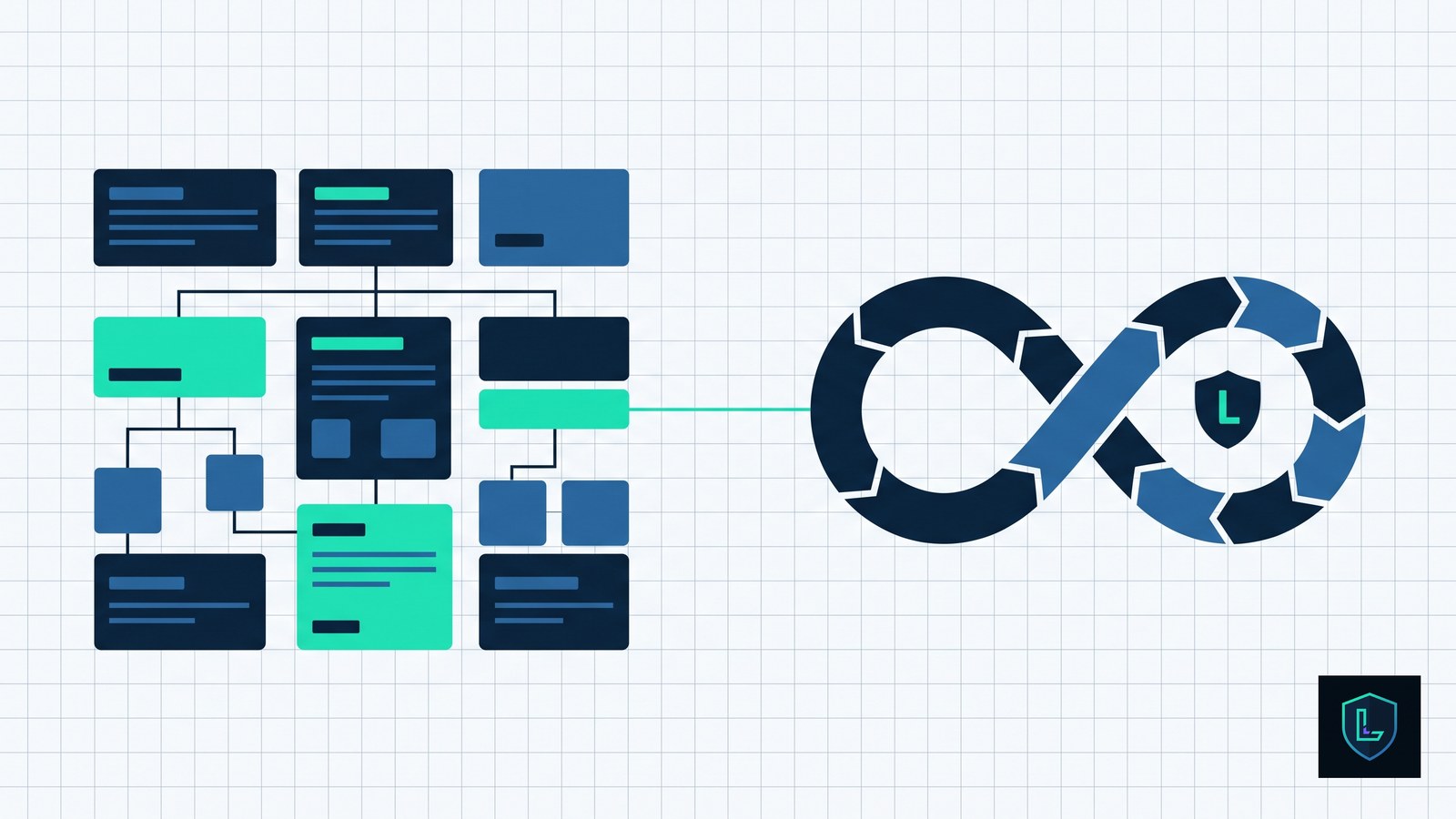
The LyraShield loop is target, review, evidence, fix, retest, report. An agentic pentest attempts to exercise detected findings against the live target, and each result is recorded as an evidence state that distinguishes a detected pattern from a proven exploitable issue from a fixed and retested one. That separation matters because a SAST finding, however precise, is still a prediction about the code, not a proof about the running system. A Semgrep rule can tell you a pattern matches, but it cannot tell you whether that pattern is actually reachable and exploitable in the deployed app.
LyraShield also runs inside AI coding agents through the Model Context Protocol, so security checks happen at the point where an agent generates code, not only in a later CI scan. This is a different integration point than Semgrep’s CLI and IDE plugins, which are designed for developer-initiated scans. Fix proposals are approval-gated: a developer reviews and approves the change before it merges, which keeps a human accountable for agent-written code. The full assurance record is immutable and can be shared for compliance or handoff.
For dependency risk, LyraShield uses SCA backed by sources like the OSV database, and it emits SARIF so findings integrate with existing tooling rather than replacing it. This means a team can run Semgrep for continuous scanning and LyraShield for the assurance run, with both feeding results into the same workflow.
The approval-gated fix model reflects a specific bet about AI-built apps. When an agent writes code, an unattended auto-fix can compound the problem: the agent that introduced a flaw is also trusted to rewrite the fix, and a merged patch that is subtly wrong can be harder to catch than the original finding. LyraShield requires a developer to approve the proposed change and then retests it against the live target before the finding closes. That adds a checkpoint, but it is the checkpoint that makes the resulting evidence record trustworthy enough to base a release decision on.
Who each tool fits
Use Semgrep when you want fast, customizable pattern scanning, you have security engineers who can triage and tune rules, and your goal is continuous detection across a broad codebase. The open-source CE is excellent for development-time feedback and ad-hoc use cases with a high tolerance for false positives, such as consultants and auditors. The AppSec Platform is the right upgrade for cross-file taint analysis, managed scanning, secrets detection, and AI-assisted triage at scale.
Use LyraShield AI when the bottleneck is the release decision for an AI-built app: you need proof that findings are real, evidence that fixes worked, and an immutable record for sign-off. The tools are complementary. Many teams run Semgrep for continuous scanning throughout development and add LyraShield for the assurance run before a release, with SARIF output from both flowing into the same GitHub code scanning view.
For teams already running Semgrep, adding LyraShield does not require ripping out existing rules or CI configuration. LyraShield emits SARIF and ships as a GitHub Action, so its findings can appear alongside Semgrep’s in the same pull request or code scanning view. The division of labor is straightforward: Semgrep handles continuous, customizable detection that developers trust and can extend, and LyraShield handles the release-assurance run that produces proof and an immutable record. That complementary pattern avoids tool sprawl while giving each tool the job it does best.
| Dimension | Semgrep | LyraShield AI |
|---|---|---|
| Primary goal | Pattern detection and custom rules | Release assurance with proof for AI-built apps |
| Detection model | SAST, SCA, secrets (platform); SAST only (CE) | Agentic pentest plus SCA plus secrets, evidence states |
| Customization | User-written rules in code-like syntax | Approval-gated fix proposals, retest before close |
| Agent integration | CLI, IDE plugins, CI | MCP inside AI coding agents plus GitHub Action |
| Output | SARIF, JSON, PR comments | Immutable assurance record, SARIF |
For the detailed breakdown see the Semgrep comparison page. The Claude Code security workflow guide covers how agent-native checks fit alongside traditional scanners.
Why teams choose LyraShield for AI-built apps
Teams choose LyraShield when a scan report is not enough to ship. The agentic pentest validates exploitability against the running app, the immutable evidence record gives reviewers and auditors something concrete to sign off on, and approval-gated fixes ensure no agent-written change merges without a human signature. For apps where the code was generated by a coding agent and the team needs to make a go or no-go decision, that loop turns a backlog of findings into a defensible release decision.
Semgrep is a superb detection tool with a mature open-source ecosystem and deep customizability. LyraShield does not try to out-detect it. The value is the loop: target, review, evidence, fix, retest, report. For an app whose code was generated by a coding agent, that loop is the difference between knowing what patterns match and knowing whether the app is safe to release.
LyraShield is live with open registration. Some platform features remain on the near-term roadmap and are not yet live, so check the current status on the site before relying on a specific capability. Run the AI app security checklist on your project, then sign up at https://lyrashieldai.com to start a release-assurance run.
Frequently asked
Is Semgrep Community Edition enough for security?
Semgrep CE is a fast open-source SAST engine, but the Semgrep team notes it is limited to single-function or single-file analysis and will miss many true positives. For security use cases the Semgrep AppSec Platform, which adds cross-file taint analysis and reachability checks, is recommended.
Does LyraShield use Semgrep?
LyraShield pairs its agentic pentest with independent SCA and secrets tools and emits SARIF, so it can coexist with a Semgrep setup. It does not replace Semgrep as a general-purpose SAST engine. The two address different problems: pattern detection versus release assurance with proof.
Can I run LyraShield inside my IDE like Semgrep?
LyraShield runs inside AI coding agents through the Model Context Protocol, so checks happen where agents like Cursor and Claude Code write code. It also ships a reusable GitHub Action with SARIF output for CI. Semgrep CE runs locally as a CLI and in IDE plugins.
Which tool should I pick for an AI-built app?
Use Semgrep when you want fast, customizable pattern scanning and you will triage findings yourself. Use LyraShield when you need an agentic pentest to prove exploitability, an immutable evidence record, and approval-gated fixes before a release decision.
Related posts
- Aider App Security Checklist for AI Pair Programming
A security checklist for reviewing apps built with Aider covering MCP server config, secrets, dependencies, and verifiable evidence with LyraShield AI.
- Using LyraShield AI Alongside Aider for Secure AI Coding
How to run LyraShield security checks alongside Aider today using the CLI and GitHub Action diff gate. Native MCP is a roadmap item Aider has not yet shipped.
- Aikido vs LyraShield for AI Built App Security
Aikido unifies SAST SCA secrets and cloud scanning from code to runtime; LyraShield wraps AI app testing in a release assurance loop with approval gated fixes.